5 September 2022

Criminal damage at Gilray House, 146-150 City Road

Earlier this year I wrote about the vile plans for Willen House in Bath Street, Moorfields, and how a horrible coating of dull grey paint will soon be covering a truly unique 20th Century building. 

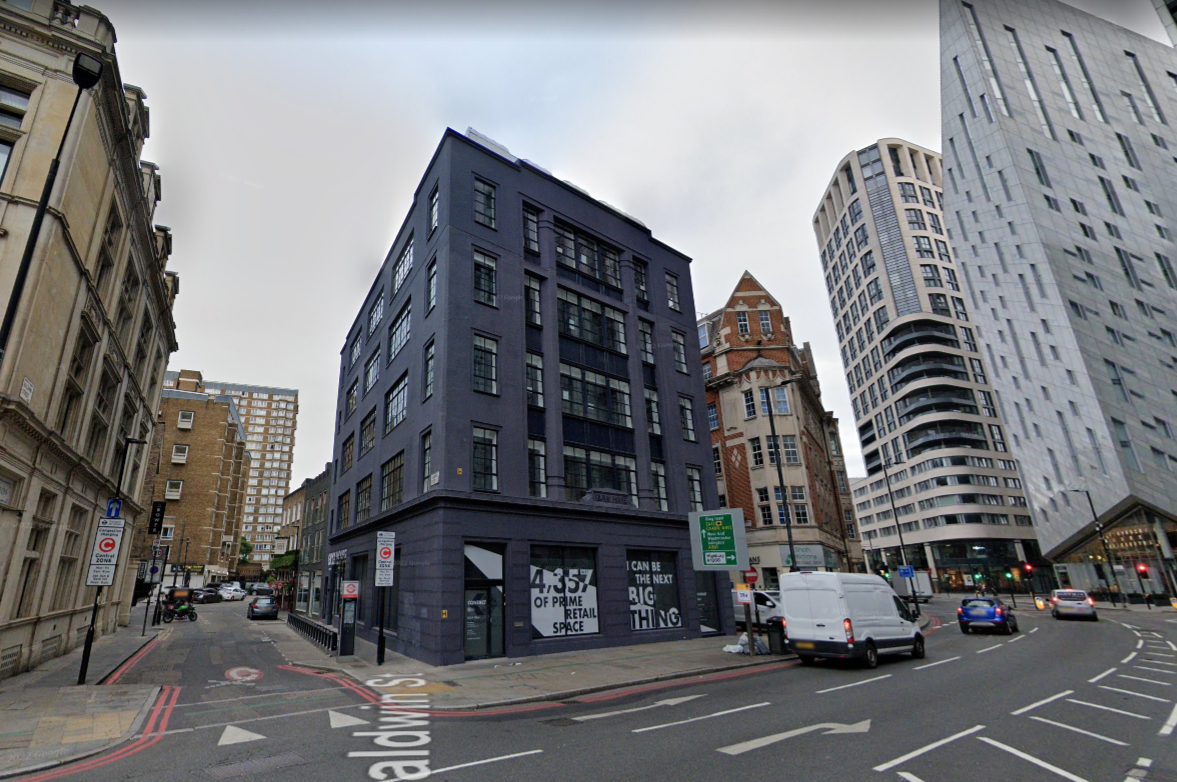
Well, just around the corner, in an area that forms part of a conservation area, there is another building that earlier this year succumbed to the slate grey treatment. I had noticed that scaffolding had been erected around it last year and I simply thought it was being cleaned. It used to look like this (pics from Google streetview): 

But no, today it looks like this:


I have often wondered if the name of the building is in some way related to the clever Georgian artist and satirsist James Gilray. I hope not, because this is no laughing matter. The delicate details are now hard to see. It has been sloshed over with what looks like a layer of thick soot, slathered across the whole building all the way up to the top where only the new addition on the roof, which looks like a spaceship, is a unpainted. 

I am saddeneed at the grey-washing of the 'deco-esque' upperfloors which continues across the elegant metal windows, previously highlighted in Barclays Bank blue which sang out against the pure white walls and contrasted with the creamy-coloured faeince tiles of the streetlevel banking hall. The whole clearly showed how the architecture in the 1920s morphed from pretty decorative styles into the simplicity of the Bauhaus. The building not only housed Barclays Bank for almost a century, but it was also originally a Post Office with offices above for Royal Mail employees.  

About 8 years ago, the building was renovated and cleaned and I understood at that time that an application had previously been made to add anther storey or two to the top and this had been rejected due to this being in the Moorfields conservation area, although they did allow another floor to be added, but it was not visible from street level – notice how the buildings on this West side of City Road are all relatively low level in comparison to the high rise modern monoliths on the other side that, incidentally, have generated a nasty wind tunnel, especially problematical as you approach Old Street from East Road. I wonder if the energy created by these manmade howling gales here, and elsewhere where other ridiculously tall buildings have been constructed, could somehow be harnessed to exacerbate the forthcoming fuel bills. And what happened to that idea about gym running machines as generators? Anyway, I digress...

Conservation areas are clearly pointless. They do little protect the buildings from greedy developers keen to cut corners and make a quick buck. But I notice here at Gilray House that the horrid light-absorbing shades of dullsville on this East-facing site has done little to tempt in new leasehoolders – most, if not all of the building, is standing empty. A big shame all round.

This building and Willen House feature on my Art Deco Shoreditch walking tour.  


2 September 2022

A new architectural style in Spitalfields, E1 - Revivialist Pasticheism

Walking from Aldgate to Old Street last weekend via Spitalfields market, I cut across Wentworth Street and into Toynbee Street. Ahead of me, on the right, I saw an Art Deco style building. I stopped in my tracks – this definitely wasn't there a few years ago and I recalled a ramshackle mess of low-level buildings along that north side, covered in posters and graffiti, as shown below, top left, and here on retrospective streetview. This new building is quite clearly a modern take on the late 1930's style of architecture complete with geometric motifs. Indeed, on the front of it proudy shows 2021. How bizarre.

I contunued along the street to find more pastiche structures in the form of late Georgian workshops, and Victorian warehouses, all with strangely colourful windows frames, and another 1930s-style building in grey tones at the far end. 

I went to investigate the other side of the block in Commercial Street and found that a Jazz Age façade now replaces some derelict low level buildings at the rear/front of the black-tiled building in Toynbee Street. 

What is going on here? If these were reconstructions of the buildings previously demolished here I'd kind of understand the point of it. But that's clearly not the case. This appears to be some kind of showcase of the kinds of buildings you might have found in the area sometime in the past. A bit touristy and cheesy in my view. Sort of like the set of a cartoon movie.

Is it that today's architects run out of new ideas?

What do you think? Do you have any further info?

Next week I will post about two lost Art Deco gems in this area.

12 August 2022

Following a trail of bloody footprints between N19 and N4

Early this morning I made the effort to get out for a walk and back home again before it got too hot out there. I was doing well, having been up to Hornsey Rise and over to the Archway station area, then into Aldi for some groceries and by 9.30 I was walking back hown headed down Holloway Road laden with two bags of shopping. Halfway down the hill the blazing sun was in my face so I turned left into Alexander Rd, N19, to make use of the shady south side of that street. 

Looking up, down and around me, like I do, because there are always new things to see, I noticed a curved brown mark on the pavement that was clearly the outline of the front part of a shoe or trainer. And then I saw another, and another, and many more. This clearly had been made by someone with a bloody wound in their right leg who had been heading in the direction I’d just come from, towards Holloway Rd. 
Hmm. How intriguing. 
Where was this person going? Where had they come from? And what had happened to cause this loss of blood?
I decided to follow the trail to find the source of the incident. 
This took me across Cornwallis Rd to the end of Alexander Rd where it meets Sussex Way, then right into Tollington Way Second pic shows view looking east), then over Hornsey Road (but sort of diagonally, not using the crossings) to Tollington Park where, by the pillar box, I noticed that these earlier prints are surrounded by lots of little blood splatters which I guess were caused by the impact each time the foot hit the pavement. Oh my god, this person was losing a lot of blood. I also think, judging my the gaps between the prints, that he was  running.
My shopping bags were starting to cut into my fingers but I was hooked, intrigued. 
The trail continues along the south side of Tollington Park and it occurred to me, seeing as we haven't experienced any rain for weeks now, that these bloody marks that appear relatively fresh, dare I say shiny, could have been made weeks ago. There was a road sweeper so I asked him how long he'd known about them but he told me he’d only just started working in this area today as he was covering for someone else. 
We had a jolly chat about sleuthing and how it made me feel like an excited 8yr old finding hidden treasure, mysterious marks and secret spaces that nobody else knew about (they did, but they never said so!). I also recalled back in the '70s when, in the middle of the night, our dog Toby barked ferociously at the back door. We flew downstairs to see what was wrong but saw nothing to concern us and assumed it was a cat out there. When we looked again the next morning we found someone had left bloody footprints down the full length of our garden and, on the paved area by the back door, a semi-circular spray of reddish brown which must've been when he span round as Toby hurled himself at the window. The fella's tracks then went half-way back up the garden where he'd climbed over fence into next door's garden and exited into the street by their sideway, ending with a large bloody mess outside the school where, we deduced, he must've got into a car. I remember enjoying the sleuthing process. And here I was this morning repeating the process. The road sweeper likened me to  Miss Marple and I wondered if I should have told him about my Agatha Christie walks and talks
I continued along Tollington Park and found that the marks crossed the road and then crossed back again to continue down the southern half of Stroud Green Rd. Well, what I mean is, this is where the guy had come from. At this point I decided it was getting way too hot to be  out sleuthing, especially whilst carrying heavy bags, and I and came home and wrote this. 
I am guessing that some kind of horrible altercation happened near Finsbury Park station, or in the park itself, and the wounded guy fled to the Upper Holloway area. He may have been heading home, or perhaps he was going to Whittington Hospital?

I can't help myself, I really do need to find out more. Later this evening or sometime over the weekend before the much-needed rain arrives, I will follow the trail in both directions to see where they start and end. 

Update 1: Saturday 13th August. 
I went back to Alexander Road this morning to follow the trail to its end and there I noticed that the splatter marks are far greater than I’d observed in earlier parts of the roue, such as in Tollington Park. Stands to reason really. I also paced it out and, even though I take fairly long strides myself, I am pretty sure by the length of the gaps that the wounded fella was running (I am still assuming a male).   
At Holloway Rd he turned right. On reaching The Crown PH he crossed over to the other side of the road. The tracks stop outside No.517/519. I couldn’t venture into those gardens because it is private property and some men were hindering my sleuthing as they went in and out to those properties installing protective metal panels on the windows and doors. I asked one of them why and he said it was due to squatters, druggies and anti-social behaviour. Ah.

Having looked further along the pavement there in both directions, between Wedmore Rd and Tavistock Terrace, I found no more bloody shoeprints. But outside No. 517, near the back door of the SPS van shown above, there are a couple of naked footprints that also might be bloodstains. Whether these were made by the same guy, I don’t know. 

Update 2: Sunday 14th August
OK, I’ve worked out where it started… 
Every Sunday there’s a Farmer’s Market in the playground of Stroud Green School, N4, here at the junction where Perth Rd meets Ennis Rd opposite The Faltering Fallback public house. I wonder how many of the people there today sipping their Fairtrade coffee, buying their organic veg and Italian wines, enquiring about the vegan cheese, etc, have noticed the very clear bloody prints that run around the school, let alone are aware of any trouble in the area recently? 
I have deduced that whatever happened to cause the loss of blood occurred on the pavement near the school’s main gates at the other side of the building on Woodstock Rd because there I found prints of varying strength in pointing this way and that. The wounded guy looks to have at first headed south towards Finsbury Park Station and then changed his mind at the end of the school fence and decided to turn round and head in the opposite direction because, bwteen there and the scholl gate there are two clear trails heading in each direction. Then clear, now very bloody, marks continue along the pavement around the school, over Ennis Rd, past the pub where he ran along the double yellow lines and then into the middle of the road before crossing over to the pavement on the east side of Stroud Green Rd.
And then it's as I have written above... he turned westward nto Tollington Park, crossing to the north side diagonally at Charteris/ReginaRd before crossing back again at the next junction, Evershot/FonthillRd. Then he went all the way to the end of Tollington Park, diagonally over Hornsey Road into Tollington Way, north/right into Sussex Way, left into Alexander Road, then over Holloway Roadd, to what I’m guessing was home. 
I've tried googling to see if this has been reported online but, even though I’ve found a couple of other incidents in the area these past few years, there’s nothing on this. I will send a tweet to Stroud Green Police and report back here if anything comes back from them.
 

3 August 2022

Mudlarking with Thames21 at Broomhouse Dock

In my last post I mentioned I recently visited the foreshore at Broomhouse Dock, right (Google Streeview pic). 

This event was an initiative created by Thames21 with the idea to get people involved with the river and local history. A few months before, I'd lead a similar event for Thames21 and Frames of Mind in North Woolwich, which was delightful success. 

When the date was set for this Hammersmith location as Saturday 16th July, when the tide would be at its lowest between 11.30am and 1pm, we had no idea that it would end up being one of the hottest days on record. And here we were planning to be on the southern-most top of Hammersmith, on a beach, with no form of shade at all apart from the shadow made by The Hulingham Club's thin boat access ramp.

Nevertheless, behatted and fully dressed, with any visible area of skin slathered in factor50, I donned a pair of the provided wellies and some gloves, picked up a bucket and made my way down to the water's edge through what must be the muddiest, slimiest, gloopiest access slope I have ever had to use to get to a foreshore. Some of the Thames21 crew and volunteer helpers were busy doing a litter pic and I was saddened to see the vast amount of nasty wet wipes* they collected that morning. If you'd like to join these clean-ups find out more at Thames21.

The pic below shows the marvellous view across to Wandsworth's recycling plant, but today there is no ferry boat at Broomhouse Dock to take us to the south side as there would have been +200 years ago.

About twelve people of all ages came to join us on the day. We had hoped for more, indeed the cool box was well-stocked with plenty of ice lollies, but the hot weather was aagainst us. Once I'd moved the group to a cleaner part of the foreshore it was lovely to see how interested people were in the whole experience. It's the possiblitly of finding hidden treasure, I think. But it wasn't a good day for finds. We found old bits of metal in the form of nuts, bolts and nails, some small animal bones and some late 1990s electrical components(!) but I didn't see a single piece of broken clay pipe stem or any sherds of pottery worth sharing with the group. However, you could go back to that same location on another day and the shore could be completely different depending on the tide and recent weather conditions. 

As I explained to everyone that day, when not with an organised group like this, in order to go mudlarking on the Thames foreshore, you need a licence, and these can be obtained from the PLA here. But there are restrictions as to what you can do even if you have a permit, such as you cannot start digging holes (you don't need to – just walk slowly and look carefully) and certain sections of foreshore are out of bounds.


In Broomhouse Lane at the corner of Daisy Lane, I noticed that the lovely building there is covered in scaffolding. Argh no, I thought. Oh phew – they are converting it into a care home, see here

*People seem to think the word 'disposable' means it will decompose. Realistically, everything is 'disposable' whether it's a car or an apple core. In this instance, 'disposable' tends to intimate that the product is for single use – just use it and throw it away, ta da!  Victorian era magazines were full of ads for disposable items, but the products back then were made of glass, paper and other components that were easy to separate and repurpose. Our plastics, especially since the 1950s, not so. Products such as wet wipes weren't on the shelves a few decades ago yet mothers the world over managed to cope ably. So, if these things are evil waste, literally clogging up the planet, why aren't they simply removed from sale? Why are companies still being allowed to manufacture them? And note, they are packaged within mostly non-recyclable plastic. Don't worry though, the children of the future will fix all this.

31 July 2022

The Parson's Green ghostsign – let's go to the Palace!

Way back in the dim distant past, in November 2008 (wow and ouch, that's almost 15 years ago!) I took some photos of a huge hand-painted sign on the side of Woolverstone House, 45-47 Parsons Green Lane. The sign is painted on the rear of what was originally a beer retailer/ publichhouse and faces north across the District Line railway on the other side of the road to the station. In 2008 the sign looked like this:

It was faily easy to decipher most of the words (see further down). I filed the pics, intending to return to the site another day when the light was better for photography.

But this area of Fulham sits in an area I rarely pass through, let alone stop, and it wasn't until a few weeks ago that I finally paid another visit to the sign. I was at last in the vicinity because I had been asked to lead a mudlarking group on the foreshore at nearby Broomhouse Dock. As I came out of Parson's Green station (possessive apostrophe there or not? I wish they'd make up their mind!) I crossed the street to check on my old friend and was delighted to find it's all still there, in fact more of it is visible than before being as that white panel is no longer in place. I had expected the whole wall to have been overpainted in some way or completely whitewashed, but I was pleased to see it intact. This was about 11:20am on a very sunny, hot and hazy day, and not anywhere close to the best conditions for photography. Hence why the best shot is this one taken from underneath the railway lines.

The sign is an advertisement for variety nights at The Victoria Palace Theatre, the Grade II* 1911 Frank Matcham building topped by a gilded statue of Anna Pavlova. 

I have returned to my first batch of pics and created this over-enhanced image to better illustrate the content.What is immediately evident by the patchwork effect here, is the amount of different panels that have covered this wall throughout the decades and, as such, helped to protect what still exists.

Top left, within a panel across 2/3rds of the wall:
VICTORIA
PALACE
VARIETY AT ITS BEST
(time) TWICE NIGHTLY (time

VICTORIA PALACE
OPPOSITE VICTORIA STATION
6.15 TWICE/NIGHTLY 8.50

I think what we have here is a build up of signs over time with the earliest one at the top left, its letterform is distinctly early C20th. It reminds me of the sign for the Palais de Danse visible from the District Line platforms at Hammersmith – that marvellous music venue was demolished in May 2012. 

Here in Parson's Green, the repetition of the venue name at the centre looks to be later addition, rendered as it is in a simpler sans serif form. And at the very bottom, partly obscured by that vertical dark stripe, is a delightful interconnection of 'Twice' and 'Nightly' where the two words are set diagonally against each other as per my pencilled example, right.

Finally, at the extreme bottom right, under the rule, it reads LONGMANS – this is either the signwriter or, more likely due to its large size (the letters being three bricks high!) i's probably the advertising agent, which I'd guess is Fred Longman of Ludgate Hill, who is listed in the 1899 postal directory. 

There looks like there might be some other smaller letterforms to the right of that name and this could have been a telephone number, but being as the mortar between the bricks has been replaced across the whole wall, this is now very hard to decipher. 

Does anyone have any better pics?

28 July 2022

Gillespie Park Nature Reserve – if the flowers start to grow, do you pick them? No no no!

I went for a wander around Gillespie Park earlier this week. I often do when I am close by. It's lovely there. It's like entering into an old woodland or part of Epping Forest because it feels like it has been there forever. Yet this magical space has only existed since the reserve was created in 1983. Prior to that, this was part railway sidings and part Stephen's Ink factory. 

I sat and watched butterflies. I listened to birds. I gazed up and around myself and sighed happily. But I couldn't see any fish in the pond. I decided to take snaps of the many signs dotted around the reserve. All very informative, but many are also inadvertently amusing, telling us about pirhana goldfish and annoying spotty people.  

Re the content, whilst I forgive the children for their amusing errors, I can't excuse the use of poor grammar in some of the other signs, many of which I have seen in parks all across the metropolis. But hey.

Today, this 2.8 hectare space, is a haven for many species of flora and fauna within its various areas of grassland, woodland and ponds. The Islington Ecology Centre at the Arsenal station end provides a lots of information and resources and, as such, is a marvellous learning hub for the local schoolchildren who visit here. It was built as the borough's first carbon neutral building and boasts many eco-friendly features though, as you can see from one of the pics above, the wind turbine that powers the buildings is no longer functional and a new source of energy is being devised.

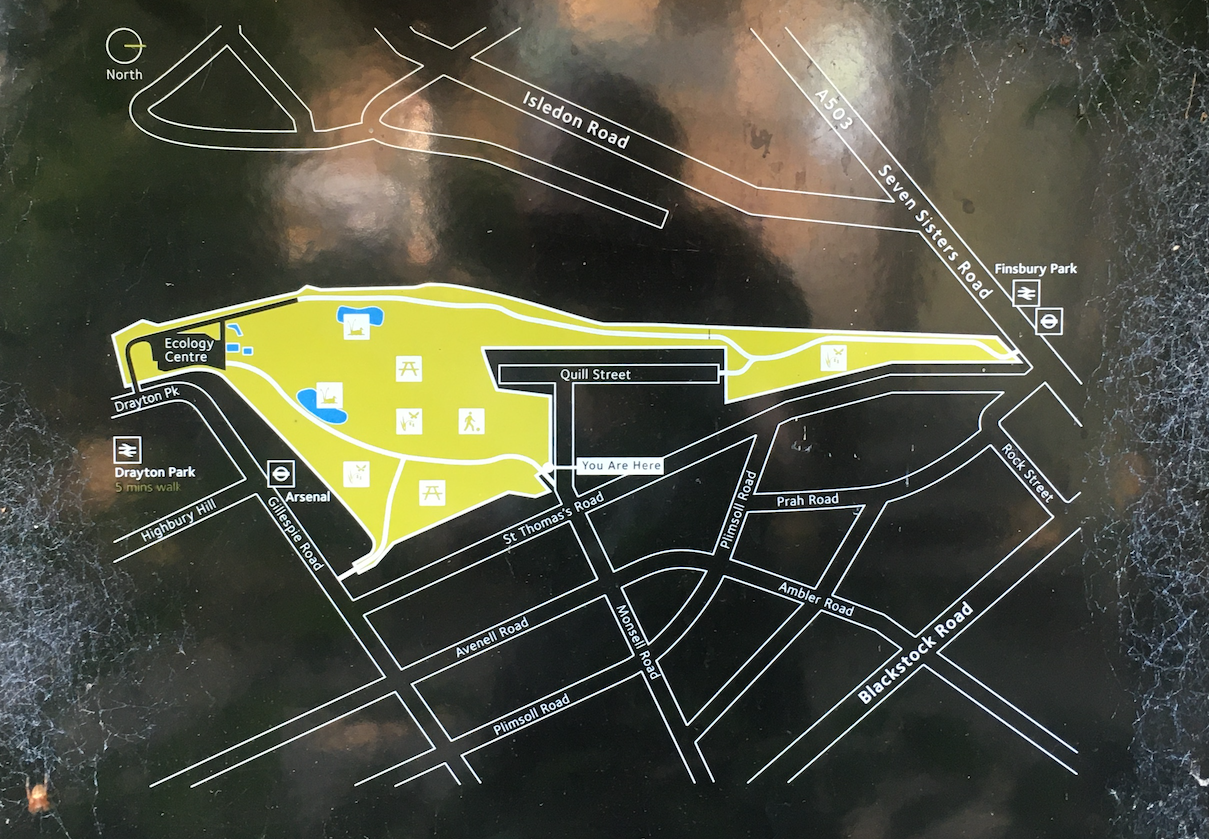
If you haven't ventured up and into here, then I really do urge you to do so, because it's a delight. Though please take note that only a small section is available to dogs (accessible via where it says 'you are here' on the map below). Once you know it's there, you will, like me, make a detour if you are in the vicinity.

On exiting from the stairs at the Finsbury Park end, I often feel as if I have just emerged from a secret enchanted place and am now back in the real world. Do check out the three mosiac panels on the wall there as they are delightful too.

Gillespie Park and Ecology Centre – more info here


27 June 2022

The Old Operating Theatre – a delight

Last month, after years of walking past The Old Operating Theatre and thinking, 'I must go in there some day soon' I walked past and thought to myself, 'I must go in there some day soon' and then I stopped, turned round and said, 'no, go in there NOW!' 

And I am so glad I did. Finally. They suggest it's a 45-minute experience but I was in there well over twice that. There's lots to see and find out up there including some quite scary surgical implements intermingled with beautiful books and other acoutrements of the trade. 

The volunteers who assists there are full of fabulous facts and info – I really enjoyed the interaction with them which was probably why I was there so long. On the day I visited I was one of only four people up there and I sat in the theatre for ages simply contempleting the room and imagining the noise and mess of the past. The whole space, including the wooden room that houses the museum, complete with it's creaky floor and cabinets full of curiosties, is a delight will definitely return, either alone again or with any friend who also has never set foot inside as I am sure that they too will love it.

The museum is just a stone's throw from Borough Market, London Bridge, Guy's Hospital, and that tall spiky thing. Getting up to and inside is via this door at the foot of the church bell tower and then a climb up a one-way narrow spiral staircase, so be aware that this is not a wheelchair-friendly museum. Find out more here.

This has got me thinking about all the other places that I walk past and think 'I must go in there some day soon' which includes Dr Johnson's House. Really. Hard to believe, I know. I did try once but it was closing in ten minutes.  

22 June 2022

A marvellous manicule in NW5

The Way To Church Lands

Walking along Gordon House Road a few months ago I spotted a directional panel at low level here just to the right of the protuding block. I took a couple of crude snaps:

This manicule (pointing hand) is probably the most elaborate device of this kind I have ever seen in London. It is not simply painted onto the slab but instead has been carved in low relief complete with chubby fingers and a lacy cuff hinting at wealth and prosperity. This ties in nicely with the kind of well-to-do traders and businessmen who would have moved their families to this area in the eighteenth century – a perfect location adjacent to the open spaces and clean air of Hampstead Heath with direct access into the City via St Pancras and the New Road (Euston, Pentonville and City Rds today). For an idea of this, you need only look the impressive houses along Grove Terrace, set back from Highgate Road. 

Other words are carved into the panel at either side of the ellipse – there is a large cap N on the left and what might be '15 Feet' on the left. There may well be more at the bottom under that veil of render. 

I think the sign points to the beginning of a footpath but I cannot find evidence of that and neither can I work out which church this might refer to. It's also extremely doubtful that the sign is in exactly the same position as when it was first sited because the panel is embedded in a wall that was constructed in 1965 as part of the Haddo House development.

I will update this when I find out more info


20 June 2022

Homepride Wallpapers ghostsign, Walworth Road, SE17

Every time I pass this Homepride Wallpapers ghostsign at 214 Walworth Road it brings a smile to my face because it takes me back in time to the 1970s when many lads wore shirts featuring a repeated pattern of little bowler-hatted Homepride Flour men. I had hoped to be able to link to a pic of a vintage shirt here but I can find nothing available, so if you've still got one of these gems, it's now clearly a collectors' piece. I did find this TV ad though – graded grains make finer flour!

To me, this painted sign conjures up mental images of walls covered in the same Homepride flour men. But where in your home would you paste it? In the kitchen, I suppose, near the larder, and surely only on one feature wall. Sounds like a ridiculous idea, but back in the day, young men who probably couldn't boil eggs, wore those shirts!

Ah, but this ghostsign pre-dates the flour. This is 'homepride' as in a pride in one's home. In the 1930s the shop at No.214 was home to Globe Art, wall paper manufacturers and the 1939 directory shows that the company had quite a few outlets in South London:

I have not as yet ascertained which of these address was the actual manufactory (tho I suspect it was most likely the Tower Bridge address where Haddon Hall now sits) but it is amusing to notice that the phone code for the Walworth Rd location and the Peckham High St shop used to be 'Rodney' as in Del Boy etc – I wonder if John Sullivan knew that when he wrote the sitcom...?

Wall coverings inspired by the Trotters' flat in Only Fools and Horses are suggested here!

18 June 2022

Old shops in St Pauls Road, Highbury and Islington

I am often to be seen walking from Holloway to Canonbury and back, and this means I use the stretch of St Paul's Rd between the two terraces of shops at the western end which still displays some hints of a bygone age or two. The shops on the right hand side adjacent to the Hen and Chickens pub are clearly older and I will return to them another day, but it's north/left side I'm going to talk about here. It starts with a single shop, No.306a, an large add-on to No.306 which is the first of six paired premises. The shops at street level have angled entrances each side of a door that leads to residential accommodation above. The door numbers are beautifully incised into the street-facing fabric of the building in a clear sans serif letterform at each side of the arches with a flower motif above them. 

First, let's look at No.296, today a barber/hairdresser. Above the shop door there two small signs in the glass advertising Ogden's St. Bruno, a tobacco product that is still available today:

In the 1930s this was a tobacconist shop managed by the wonderfully-named Samuel Brilliant. On the subject of names, at No.298 in the 1910s, there was a confectionery shop run by the perfectly-named Miss Eliza Sweetland. I wonder if she was led into this line of work by nominative determinism?!

Two doors along at No.290 is Sawyer & Gray. As far as I can make out this café and homewares shop (no wifi or laptops, hurrah!) took its name from a name that was uncovered about ten years ago. Indeed, today's S&G was established in 2012. But the Sawyer and Gray of 1939 was a confectionery shop (Miss Sweetland no longer in evidence). It's really nice to see old signage revitalised like this.  

And now to a location past just the bus stop and the cobbled access to the rear. At No.276 today you'll find Firezza Pizzeria. Thick layers of green paint are currently being removed to reveal shiny ultramarine blue tiles. And this suggests it was once a laundry:

A quick look at the old Kelly's directories confirms my hunch. This was indeed a Western's Laundry shop. This blue-tiled exterior being the usual style for Western's and for Sunlight Soap – see more here. Customers' sheets and shirts were collected by vans at the rear via that cobbled side access and then taken to the large facility in Drayton Park which I waffle about on YouTube here(!).  The 1915 directory tells me that this site was previously Isendure Laundry Ltd, an independendent local business that looks to have been subsumed into the Western's umbrella by the 1930s. 

I really hope if they manage to clean off all the green paint and retain the blue tiles, not just for their specific historic value but for logic's sake. I mean, what is the point of painting tiles?! Tiles are washed by rain, or easily wiped. 

Next door to the old laundry, at a site recently vacated by St Paul, there was a dairy/grocery store, no doubt also making good use of that cobbled side access. Throughout bygone centuries, Islington was well-renowned for the quality of its milk – that's a story you've probably heard me tell many times if you've been on my walking tours. 

In 1915 the dairy at No.274 was run by a woman called Mrs David Davies. At some time in the 1920s it had become part of United Dairies, a company famous for pioneering pasteurised milk. 

As you can see by my dodgy pics, taken through the window, the shop interior still retains much of its interwar United Dairies tiled walls -clean white wth geometric stripes in two tones of green.  The exterior still retains the panelled sections in the window glass, but the minty-green tiles and air vents at low level have been covered (or replaced?) by wooden panels. This view from 2008 shows those elements still in place when it was a chemist's shop. The archive pic above right shows a UD shop in New Eltham, dated 1933, and this gives us a sense of how this St Paul's Rd store would have originally appeared. How lovely.


17 June 2022

A Co-operative ghostsign in Walthamstow

I little while ago, I heard that a Co-operative ghostsign in Walthamstow had been overpainted. I'd assumed it was this one below, on the side of Tommy's Tuck-in Cafe at 422 Forest Road opposite Lloyd Park and the William Morris museum.

But no, passing it on a bus earlier this week, I see it's still there, albeit slighty obscrured by modern signage panels at low level. My pic above, taken on a dull day in October 2008, shows that some of the wording has, over time, been overpainted. A brighter day can be found on retrospective Google streetview here.

The parts that have been covered/saved by a later C20th advertisement appear to read:

SOCIETY Ltd
(...)  Enjoy the Best (....)
Co-operative Trading

Unfortunately I can't get any further with this because I don't have any reference to hand for Walthamstow. At the time this was created, Forest Road would not have been part of Greater London, so do let me know if you can shed more light on this one because the lack of local listings and directories is hindering my sleuthing abilities.

Note the name of the street, Jewel Road – I love that the roads either side of it are Pearl Road and Ruby Road. I have no idea why this should be. Again, any further info welcome.

Oh, sorry, I almost forgot – the 'lost' Co-operative sign mentioned in my opening sentence was at another site further east, visible from St James Street station, here and there are lots of ghostsigns in that area of Walthamstow, almost on every corner.

Both of these Co-op shops would have been rather small compared to the Co-op's marvellous building on Hoe Street which features some fab examples of the society's often-used beehive motif, a symbol of working together. This big store also sports some commemorative panels that show that it was constructed as the Stratford Co-operative Society. Notice also that there is still a Co-op funeral services shop trading from there.

At the Hoe Street end of Ruby Road there is a recently uncovered ghostsign for Warner's the super grocers', an independent local trader who can't have been pleased about the co-op's domination in the area. And another Walthamstow ghostsign that intrigues me can be found just east of Jewel Rd, at the northern end of Wood Street, on the corner of Woodlands Rd – there's a long wall where one of the signs had been covered and protected. It was revealed c2016. I went to check on it a few days ago:

This one is proving hard to decipher. There are tantalising hints of red and black script under that cream paint but thus far I can only name out the word 'The' which is isn't getting me very far. Who knows, perhaps it's another Co-op sign?

Let's keep an eye on these walls because our modern water-based polymer paints will not stand the test of time – the layers of weathershield will gradually peel away to reval the ghosts of the past... ooh, the suspense!

10 June 2022

The [marvellous] World of Stonehenge at The British Museum– until 17th July 2022 (and a tirade about the V&A's awful Fabergé show)

I am a bit late behind here – I went to see this marvellous British Museum exhibition back in March and I really thought I'd posted about it, especially as I enjoyed it so much, in many different ways.

First of all, this is not an exhibition about Stonehenge itself, nor is it aboout the other Europens sites mentioned in the blurbs. It's actually about the many beautiful items that were being created at the same time the stones were erected. I must admit that I had glossed over that myself when I bought the tickets (I don't like to be laden with preconceptions) and I am so glad I did that, because the surprise at seeing so any intricately-created pieces really did impress me. I had lots of conversations with other attendees there and we were all in a sense of awe. The gold pieces, in particular, were a revelation to me.

Despite being aware that other ancient civilzations, such as in Egypt, were capable of such fine work, I had never before really considered that the same was happening here. This meant that after seeing the show I went to look at other relevant exhibits in the main museum, specificlly intrigued by the gold torques (collared necklaces).

One display at this the show is a collection of carved spheres, each the size of a cricket ball and all different. An accompanying info panel tells us that it has not been ascertained as to what these were created for, or why. They all have intertwined geometric patterns, circular motifs or textured grids on them.


A man at my side was also intrigued by these orbs and we tried to come up with some ideas of our own. I queried why there needed to have a purpose at all and perhaps they were merely decorative. Consider in the future, what will people think of the pointless items of today such as figurines, ornaments, snow domes, nodding dogs, even Rubik cubes and acrylic fingernails? Perhaps these stone balls were simply something to make whilst chatting with the family after dinner or around the fire in the evening, or the crafters were simply honing their skills or testing out new designs and patterns for use on other larger projects. Could they even be the equivalent of a sample set, like a 3D swatch book? Or were they apprentice pieces like those made more recently in the cabinet making and tailoring trades?

We also liked the cases and cabinets that hold the exhibits here – everything is beautifully and clearly displayed within cleverly-constructed thick basic chip board, painted in colours that evoke stone, slate, wood etc, with all the edges rounded and smooth. 

There's lots more to see than gold and balls... do go and check it oout... five weeks left. Tickets here

From the sublimely simple and effective to the ill-achived mess that was the Fabergé exhibition at the V&A – dreadful and disappointing, on so many levels. 

This exhibition ended in May. First of all, you couldn't take photos. Well, that's OK but how can you see the teensy weensy workmanship? I often take a snap of small things at museums simply to be able to zoom in for a better view. And, surely, it's the detail in Fabergé pieces that's the most impressive thing?  This might have been assuaged had the pieces not been within cases that only alowed one or two people to view at a time (and here we are in a world of socal distancing!) and only one view possible, from the front. A few carefully positioned mirrors within those cabinets would have been helpful, to say the least. And they could have pasted large format macro shots of the jewelley on the walls or around the cabinets. Or at least supplied magnifying glasses as I have seen available at other museums and galleries. 

The design of the show looked cheap, as if each room had been given to a different first year interior design student as a project. On entering the show there were three big free-standing alcoves, the outer two with nothing in them at all, looking as if they were there for selfie opportinities. Oh, but, no; there was no photography allowed. The first exhibit next to the alcoves was an intricate Fabergé piece but with scant explanation and this threw up lots of questions but we couldn't find the answers, even when we realised that the introduction about the man himself was on a wall behind us, such that it is not visible as you enter. Then a queue to view tiny things in those aformentioned cabinets along a wall. This took ages and I gave up half way hoping that things would improve. Nope. 

Other rooms referred to places and people we had not been introduced to before and I kept going back to previous rooms to find info I might have missed only to return empty. We kept asking 'who?' 'what?' or 'where?' such as a big pic of a shop in part of a short movie that we later sussed by accident was Bond Street. To watch this movie involved standing where people were constantly walking past hindering the view, yet there were clear empty spaces in that room that could have been better adapted.

Only one room had an attempt at graphics on the walls, in the form of white lines on a green backround evoking diamonds, yet this was only in the corner of that room. And with no apparent specific relevanceto the pieces within those cabinets. Another room was shoddily 'decorated' with what looked like recycled props from a wedding or corporate event in the form of fake plants and trellis work. We could not understand twhat a garden had to do with it at all. Oh, and half way through the exhib, two parts of the building are linked by a utilitarian connecting tunnel/room that was painted black. Black like a cave. Talk about ugly. Surely something could have been done with this to make it feel part of the show?

The occasional info panels (A3 sheets pasted on the walls) also look to also have been designed by a novice. I have never seen such ugly misplaced typefaces. I managed to take a couple of cheeky photos even tho on the third attempt I was sternly told 'no photos' even tho I expained that I was snapping the info panels for typo reference, not the jewellery. What a jobsworth! As you can see here, one headline typeface is used here and there but not consistently (other signage had random horizontal rules above or below). Some wacky designer has created a font wherby all elements are the opposite of how they are in cuts of say Times Roman etc. Thicks replace thins and it makes for something that's really hard to read. Oh how radical. But why use it here? Also, a similar serif font is used for headings elsewhere, sometimes all caps, sometime U/lc, as per on the Acknowledgements boards near the exit. These two headline fonts are married with a horribly clunky sans serif for the body text that has clearly been designed for screen use. Bleargh! None of the typefaces used bear any relevance to, or enhance or complement the elegance of the high-end Fabergé brand. 

And then to the last room where Fabergé eggs were displayed in free-standing tall cabinets. Hurrah it was possiblt to walk around all four sides but still not possible to see anything up close and, as with the earlier rooms there was lots of whate space above and below ther glass where large format close-up images could have been installed. Little info panels told us about things inside the eggs that were not visible being as the item was closed. Aaargh. A simple bit of photographic reference would have helped.  The room was horrible, very high, and a strange makeshift-looking dropped ceiling had been installed making it feel like we were in someone's bad barn conversion. And finally, we were amazed to discover there was no shopping experience on exit. We had hoped to flick through some books, admire some Fabergé-inspired jewellery and perhaps buy something relevant like an egg-shaped fridge magnet (that's something I have invented right now). But no... into another dark corridor and out into the museum proper.  

If you missed the show, you didn't miss much at all. The pics and info on the V&A website here are much more informative

There's probably mistakes in this Fabergé rant. I wrote it as a stream of consciousness and I am not going back to edit/check it... If the V&A and Fabergé don't care about the details, then why should I?!!

9 June 2022

Cornelia Parker at Tate Britain, 2022

Yesterday I went to my favourite London art gallery, Tate Britain, to see the marvellous works by the wonderfully talented Cornelia Parker. This inspirational woman not only shares my surname but also seems to have similar internal questioning dialogue about the things around us and the patterns she sees on the streets around us. 

A few friends had been to the show already and I did my best to avoid their many photos on social media as I always prefer to see an exhibition/film/performance 'cold' with no preconceptions and that way I get a true reaction on seeing something for the first time, having not been discoloured or enticed by often misleading enthusiasm or criticism.

I said I wouldn't take photos myself, but I just couldn't help myself when I was there. These little 'Parker does Parker' shots are shown as snapped in square format and you might have already seen some of them on my janeslondon Instagram feed. I hope they intrigue and entice you. 

 Every room was full of clever ideas. And there were many other things I admired there, and the thoughts and ideas behind them too, each explained in print beside the work written by Cornelia herself, which is really refreshing as we usually have to read generalisms and suppostions composed by gallery curators using marketing-speak. I particularly liked reading how she had spoken to and gained access to various institutions or tradesmen in order to obtain quite unusual products with which to make her artworks. The works about what's not there, remains and negative spaces are particularly clever, I think.

I spent quite a while looking at her set of photos of the wall in Caledonian Rd that is the boundary to Pentonville prison. I have taken many similar photos myeself and call them 'accidental abstracts' created where walls have been patched and partly repainted. Here we see Cornelia doing the same. It's amazing I haven't bumped into her in that area of North London over the years. The render has been recently chipped off the wall, and looks to be in a state of flux. See here. It had previously reminded me of, and gave me a taste for, a pint of Gunnness, where the white met the black in a fuzzy line as here.

Oh and there's embroidery, wirework, movies, installations, and so much more. A marvellous body of work. I will probably go back for a second visit as it is on until 16th October. More info here.  


1 June 2022

A day trip to Leigh-On-Sea

Thanks to my guided tours and online talks these past few years, I have met some lovely people who have become friends. Last month, after leading my 'Arcades and Alleyways' tour in the Piccadilly and St James's area, I was enjoying a few after-walk beers with some women who had attended the tour and, as we discussed the Southend area, an idea was hatched to meet up for a friendly, non-planned, day out in the Southend area, and this came to fruition yesterday.

We arranged to meet at Leigh-on-Sea station at 11am. My train journey to there is lovely. I caught the Overground from Upper Holloway to Barking, a delightfully varied route with contrasting views of leafy cuttings, the River Lea wetlands, shopping streets and industrial zones. Yet I noticed that most other travellers had their faces embedded in their phones therefore missing all the ever-changing delights outside. At Barking I caught the Southend via Grays* (southern route) which offers marvellous views of the Tilbury area, the Rainham marshes, the Dartford Crossing bridge, old churches, cows and horses in fields, and boats and various forms of industry along this part the Thames estuary. Lovely. 

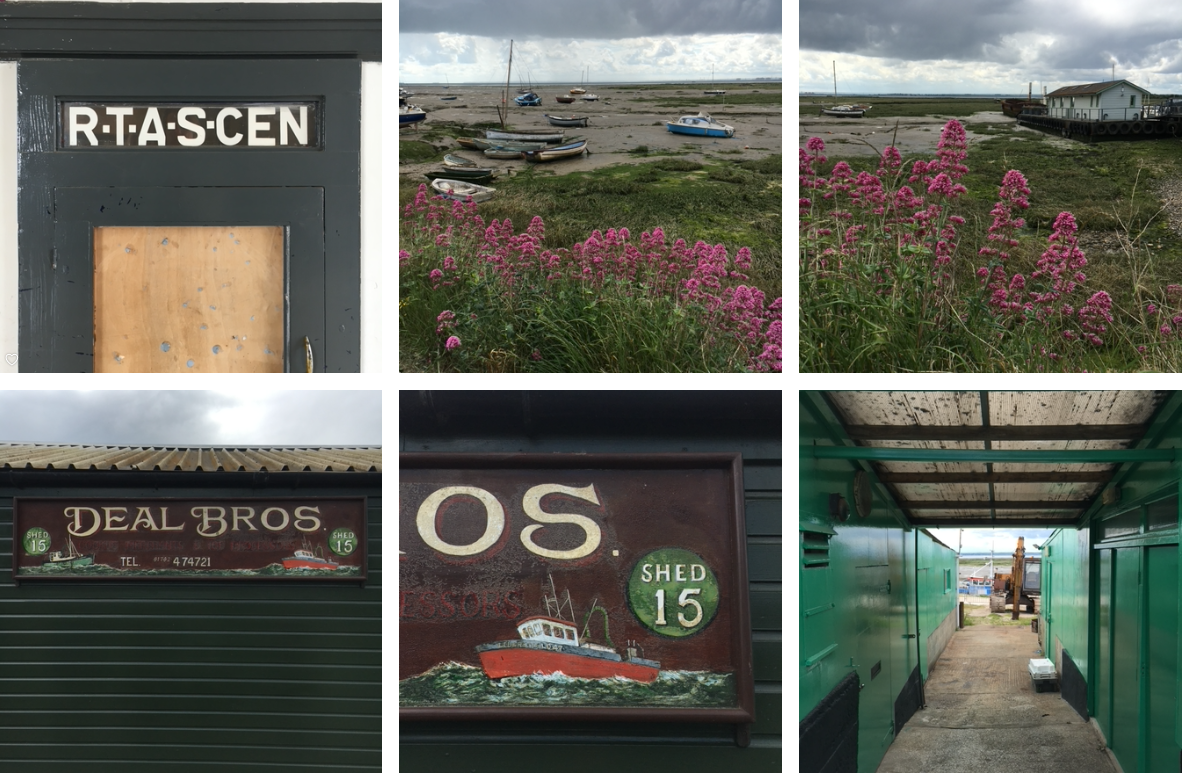
Exiting Leigh-On-Sea station there is an information board which includes the delightful map, above. We made our way down the steps to the access road that runs along the coast, taking in the peaceful views across the mud flats and the beautiful plants and flowers at the path's edge. We were tempted by the seafood in the shacks there but we abstained.


The road morphs into the High Street, still marked with Victorian vitreous enamel signs, and there lots of pubs to choose from. Lots of pubs – a condensation of inns and taverns that in bygone times would have been packed full of fishermen swigging pints of ale and smoking clay pipes after hard days, perhaps weeks, out at sea. We had a beer in The Crooked Billet, then wandered about taking in the architectural details and hints of history. We peeked in at the museum but decided as we were hungry to go back later (oops, we forgot... next time!). Then a lovely fish and chips lunch at The Mayflower.

The tide came in. Chris and Susie jumped ship at this point but Juliet and I continued eastward along the footpath and went up over the bridge to Leigh-on-Sea's residential and shopping streets where were looked at unusual headstones in the churchyard and admired the lovely seaview houses with their metal verandah additions. There are some really good independent shops in Leigh-on-Sea, many of which retain their original Victorian or early C20th fittings in the form of spindle-framed street-level windows and jazz Age era sunray glass, respectively. The rain that had been forecast for the day never really came to much and we managed to dodge the only downpour with a well-timed tea stop. Then we ambled back down to the waterside and got to the station at about 6pm noticing that the tide had gone out again and it all looked just as it had done when we arrived at 11am.

A delightful day out. We two had the whole train carriage to ourselves on the way back, enjoying those marvellous views on either side in a different, late-afternoon, light. We passed the ruins of Hadleigh castle and I thought, 'that's due another visit' and as we went past a sign to Tibury Fort I was reminded that I still haven't been there. How has that not happened?... Must go back again to this part of Essex soon. It's too nice, and too easy not to do so more often. 

*spotted from the train – an old Art Deco era cinema with STATE around the top – it is hard to see from the pedestrianised High Street today but you can see it from the car park here. I have just doscovered that this is a Grade II* listed building. Wow! More info here. Considering I used to drive back and forth twixt Romford and Grays when I was in my late teens and early twenties to meet friends, to go to pubs and clubs in the vicinity, I do not recall ever seeing shopping streets there, let alone a 1930's picture house. My online wander via Google also shows that there's a fab example of an old Burton's shop there too. So let's add Grays to the list of places to visit on my next South Essex venture.